Deepening is usually cheaper when the existing casing is sound and the extra depth needed is modest, because you keep the upper casing, slab and hookup. If the casing is corroded, too narrow or badly sited, a new well is often the better value. Our depth guide shows what nearby wells reach.
24/7 · Weatherford & Parker County
Well Deepening for Parker County Wells Losing Water
When an older, shallower well can't keep up anymore, the choice is lower the pump, deepen the hole or drill new. The casing, the district rules and your neighbors' wells decide it.
(817) 382-3840 · Open 24 hours, 7 days a week
Call if you see
- Pump draws air or trips on low water in summer
- Static level has dropped since the well was drilled
- Older well noticeably shallower than neighbors' newer wells
- Pump already set near the bottom of the well
Last updated
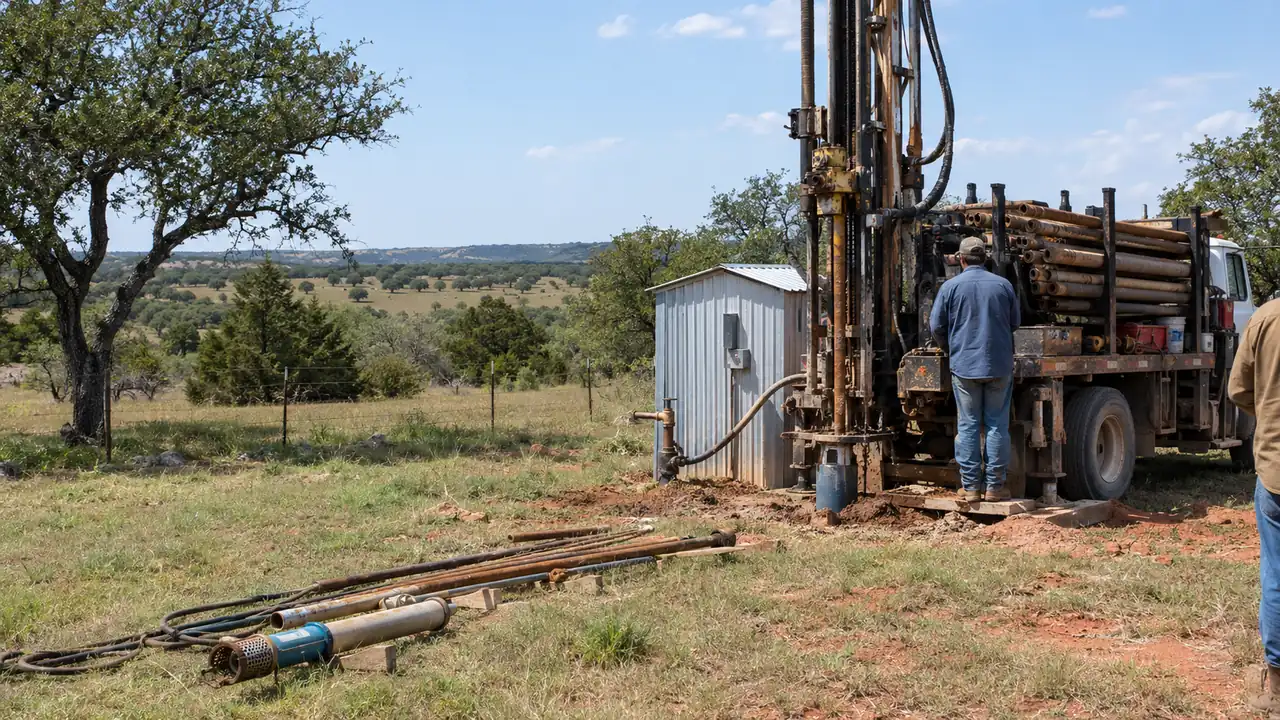
Water Well Drilling Weatherford handles well deepening for Parker County owners whose older wells are losing water. It’s a growing need here. The Texas Water Development Board’s driller reports show new wells getting deeper in parts of the county. Around Aledo, the median new household well went from about 240 ft in 2011–2013 to 320–350 ft since 2018. Around Brock, the median water level in newly finished wells has dropped from about 90 ft to 125 ft over 15 years.
First question: is there water left below the pump?
Before anything else, we measure the static and pumping water levels and compare them with the pump setting and total depth. If there’s still a healthy column of water below the pump, lowering the pump may be the cheapest fix. It costs little more than a service call plus pipe and wire. If the pump already sits near the bottom, the well needs to go deeper or be replaced.
When deepening makes sense
- The casing is sound. A deepened well still relies on the upper casing and surface seal. Corroded or split casing should be lined or replaced, not built on.
- Deeper water is known nearby. Newer wells around yours reach productive sand below your well’s bottom, which is often true where older wells stopped in the Paluxy and newer ones reach the Twin Mountains.
- The diameter allows it. Drilling below existing casing uses a smaller bit, which limits how large a pump and liner will fit.
When a new well is the better buy
If the casing has failed, the well is too narrow for the pump it now needs, or the site no longer meets setbacks, a new well is usually better value. On lots that are tight under the 2027 spacing rules (100 ft from property lines and 300 ft from other wells for household-class wells), deepening an existing well can also be the only practical option. That’s worth knowing before an old well gets plugged.
Paperwork
A deepening is reported to the state like a new well, and the Upper Trinity district’s record for a registered well should reflect its new depth. We handle the filing and give you a copy, along with the pump’s new setting depth for your records.
What's included on every well deepening call
- Original State Well Report and nearby newer wells reviewed
- Static and pumping water levels measured
- Pump pulled and casing inspected
- Deepening vs lower pump vs new well compared in writing
- Drilling below the existing bottom with liner or screen as needed
- Pump reset to the new depth and resized if needed
- Wellhead brought up to current seal and cap standards
- Well report filed and a copy given to you
Related resources for well deepening
Well Deepening: three ways it gets done
| Item | Lower the pump | Deepen the well | Drill a new well |
|---|---|---|---|
| When it fits | There's still water column below the pump | Casing is sound, and deeper water is known nearby | Casing failed, well too shallow or site non-compliant |
| Relative cost | Lowest | Middle | Highest |
| Paperwork | None beyond the service record | Well report for the deepening; check district requirements | New registration, spacing and setbacks |
| Risk | Sediment if set too low | Casing diameter limits tools and pump size | Site must meet current spacing rules |
How well deepening works, start to finish
-
Look at the records
Your well's original depth and completion, and the depths of newer wells nearby, show whether more water is likely below.
-
Inspect the well
The pump comes out and the casing is checked. A deepened hole needs sound casing above it, and its diameter limits the tools.
-
Compare the options
You get prices in writing for lowering the pump, deepening, adding storage or drilling new.
-
Deepen and re-equip
The well is drilled deeper and completed, the pump is reset, and the well is disinfected and documented.
Need well deepening in Weatherford or Parker County?
A person answers 24/7 and prices the job before work starts.
Well Deepening questions
Is it cheaper to deepen a well or drill a new one?
Do I need a permit to deepen a well in Parker County?
The driller must file a well report for the deepening, just as for a new well. Check with the Upper Trinity Groundwater Conservation District before work starts, since a registered well's record changes when its depth does. We confirm the district's current requirement for your well.
How do I know if my well is going dry?
Signs include sputtering taps, pressure that fades during long use, a pump that trips on low water, and problems that get worse each summer. Measuring the static and pumping water levels confirms it. See is my well going dry?.
Why are newer wells deeper than mine?
Around Aledo, for example, state reports show new household wells went from a median of about 240 ft in 2011–2013 to 320–350 ft since 2018. Around Brock, the median water level in new wells has dropped from about 90 ft to 125 ft over 15 years. Older, shallower wells feel those changes first.
Do you answer after hours and on weekends?
Yes. The phone is answered 24 hours a day, 7 days a week. After-hours work is priced before we roll, and if the fix can safely wait until morning we will tell you so.
Sources
Related well services
-
Residential Well Drilling
New household wells for Parker County acreage: siting, district registration, drilling, casing, grout and a pump sized to the hole.
-
Well Water Storage Tanks
Storage tank and booster systems that let a low-yield well keep up with a household.
-
Well Rehabilitation
Cleaning, shock chlorination and redevelopment for wells losing yield to iron bacteria, scale or sand.
Request well deepening
Tell us what the well is doing and where it is. Not urgent? We'll call back first thing.
Faster by phone, any hour: (817) 382-3840